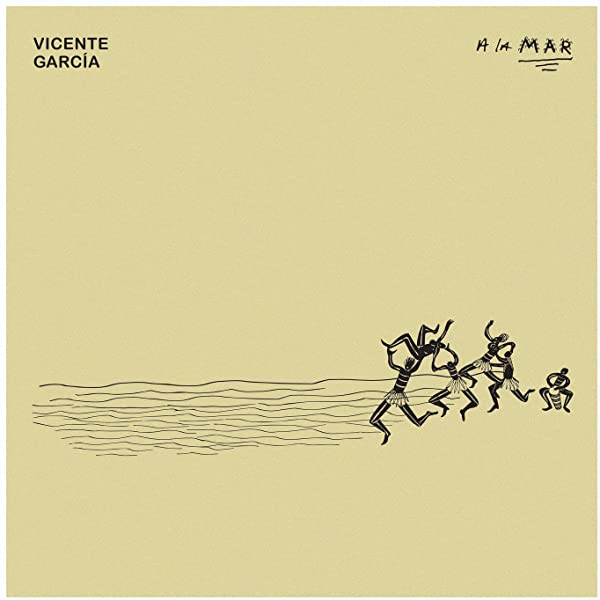
Vicente García, Sony, 2016
A La Mar is García’s second album, released in 2016, from the same producer as Calle 13, Visitante; however the work breaks from bachata, and utilizes softer melodies, acoustic guitar, and is well rooted in the African influence of the Caribbean, successfully playing with folk, ska, reggae, and afro-latin genres. A La Mar was ranked by the L.A. Times as the best album of the 2010s by any Dominican artist. García states, “Quería reflejar la cultura de República Dominicana, pero desde una situación distante de lo que todo el mundo conoce, alejada de la costa turística de Punta Cana” [I wanted to reflect the Dominican culture, but from a distant place away what anyone would know, far from the tourist coast of Punta Cana].
The opening track beautifully brings the listener to the ocean. The acoustic guitar is the only instrument the track starts with while others are slowly added–pulling the listener into this world that exists near the sea and eventually adding back up vocals and waves crashing. One refrain breaks the happy twang of the guitar and García mourns the sacrifice he gave to a lost love with African backup vocals, from las Salves de Villa Mella, more rough waves crashing, and an overall dissonant sound. Although it is different from the rest of the tone of the song, it is successful as an opposing refrain to add contrast to the rest of the track. Without it there would be no significant artistry to the song. It makes the opening piece an artist’s introduction to the rest of the album rather than a hit marketable single. However, the song ends on a playful note expressing he will forever be entranced by this lover and the acoustic guitar returns again. García describes it himself as ”Una historia que a partir de una cándida narrativa poética revive paisajes de la República Dominicana” [A story that, from a simple poetic narrative, revives the Dominican Republic ‘s landscape].
If the opening track listens as more of a work of art and poetry, “Dulcito e Coco” is one of the many hit repetitive singles to follow. It has a lamentable romantic essence to it with its minor key. García pines for his lover, describing her as sweet and like a coconut. The song embodies the pain of attachment to one another, especially an unrequited love. He utilizes an electric as well as an acoustic guitar, contrasting with the typical Caribbean precision to create something unique to describe the Caribbean’s Spanish and African influences on the Dominican Republic. It has a repeatable chord progression making the song catchy, along with a memorable chorus that may be repeated one too many times toward the end because it always gets stuck in my head.
The following track, “Carmesí,” is another love song. However, it takes a much different approach from “Dulcito e Coco” using a brighter sound to the guitar. Moreover, García does not change pitch as much at the end of the line and, in contrast to “Dulcito e Coco” where the listener was always being brought down. He is illustrating the happiness of love and the home one finds within another. I love hearing the strings introduce the curiouses–giving the song this Mediterranean feel of Spain, while hearing a distinctly Caribbean percussion. Chills to say the least. The bachata blended with Dominican folk brings me personally on a romantic journey through Antillean vistas. Although this song also gets repetitive at times, the strings always seem to make me indifferent to the lyrics because I keep wanting to hear their sound and cord progression over and over again.
The last song I’ll touch on is “Bachata En Kingston” the most popular track of the album, winning the best Tropical song at the 2017 Latin Grammy Awards. It is also the song that drew me to the entire album in general. The lyrics themselves describe García upset that his lover is dancing with another, and that only if he played Bachata and reggae she would return. The syllabic lyrics make the chorus so fun to sing along to. I usually belt it in the car alone where no one can hear me mispronounce the Spanish. Also, I absolutely love the sound of the electric guitar on this track which creates a simple melody that feels like it’s mimicking a the fullness of a steelpan.
Although I cannot thoroughly touch on all of the tracks from this album, I invite you to close your eyes and listen. Imagine yourself to be the cigüita, the Caribbean bird, that García describes in the opening, souring and leaving his window to overlook the Antillean landscape of land and sea.
Below is the interview referenced in the review, all translations by the author:
 Sonic Explorer