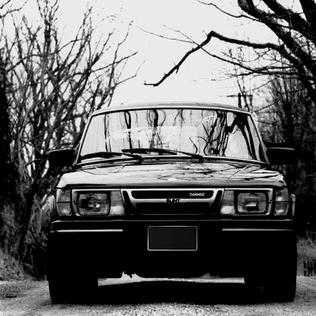
A Tweez Retrospective
Are Tweez retrospectives a thing? As it stands right now, it seems like Tweez is an extra-forgotten entry in the catalog of “oh, I didn’t know they had another album” bands. Even Slint’s own Spotify page doesn’t remember this one: the included lyrics for “Charlotte,” Tweez‘s fifth track, are actually the lyrics for “Breadcrumb Trail,” the first track on Spiderland. This is unfortunate: while Tweez isn’t close to being a transformative super-classic on par with the band’s second album, it still deserves to be examined and remembered.
Let’s back this thing up a bit. Before Slint, there was a Louisville punk band called Squirrel Bait. Squirrel Bait was a short-lived group (1983-1987, according to Wikipedia) that ended up becoming an oddly important footnote in rock history. They opened for Hüsker Dü and (more important for this story) Steve Albini’s eardrum-scraping post-punk group Big Black. Their members went on to play for big-name alt/post rock bands like Tortoise and The Breeders, but two of them— guitarist/vocalist Brian McMahan and drummer Britt Walford— became founding members of Slint in 1986, along with bassist Ethan Buckler and guitarist David Pajo.
Two years after Tweez hit the presses in 1989, Slint released Spiderland, which I probably don’t need to tell you about. I don’t want to write about Spiderland qua Spiderland too much because there’s nothing I can say about it that you haven’t heard or read or thought for yourself already. For my purposes here, Spiderland is a lot more interesting as a point of comparison to Tweez.
Tweez is kind of an odd duck; the members of Slint recorded it when they were either in high school or just barely out of high school, after they’d already become figures of some regard in the Louisville punk scene thanks to their involvement in the aforementioned Squirrel Bait. There’s a whole-ass book on their history and how they created one of the most quietly influential rock albums ever produced, and I’ve provided links to a disappointingly short Google Books preview and a digital storefront below this piece. For more financially accessible insights into the band’s history and way more stories about poop than I ever could have expected going in, check out the below-linked Breadcrumb Trail from filmmaker Lance Bangs.
So what separates Tweez from Spiderland, sound-wise? There’s a twang in some of the tracks here that betrays the group’s Louisville origins. Some of the songs (I’m thinking of “Ron” and “Kent”) move with a grimy, herky-jerk rockabilly beat, like a honky-tonk bar after a zombie apocalypse. In places, Brian McMahan’s dust-dry, spoken-word vocals sound like they’re coming out of Dale Gribble’s adolescent punk-rocker cousin. To my ears, McMahan scaled the accent back a little bit on Spiderland, but I’ll need a bonafide Southerner to tell me if that’s true or not.
While Tweez makes ample use of those crashing quiet-loud-quiet-loud rhythms that characterized so much of the band’s work on Spiderland, the record is almost never silent. Steve Albini and the band fill the spaces between (and during) songs with off-the-cuff studio conversations and odd sound effects. The transition between “Carol” and “Kent” is a twenty-five second recording of someone (it sounds like Brian McMahan?) drinking something while positioned uncomfortably close to the mic. They break bottles and kick the shit out of music stands. Perverse legend has it that Tweez contains samples from “The Anal Breathing Cassette,” which is a series of recordings of Brian McMahan and Britt Walford shitting in various positions. The supposed excerpts from that tape bridge “Warren” and “Pat,” and well… I’ll leave the decision-making up to you. “Warren” is linked below; listen at your own peril.
My favorite piece of music on Tweez is the aforementioned “Ron,” the album’s opening track. There’s so much Big Black visible in this song, from the “killdozer” guitars (adjective appropriated from Robert Christgau’s review of Songs About Fucking) to the mathy drum rhythms and spoken/shouted pseudo-poetry about bored people in small American towns. The creeping, arcing guitar that kicks off the album sounds like a cousin of the screaming riff that appears throughout Spiderland‘s “Nosferatu Man.” It’s an incredible synthesis of the very best that both acts have to offer. Slint are able to temper Steve Albini’s musical id to some degree, and “Ron” sounds like a Big Black song with a silencer screwed onto it. It also clocks in at just under two minutes, which seems to nod toward the punky roots of both the band and their producer. At 39:33, Spiderland is ten full minutes longer than Tweez‘s 29:31, but Tweez boasts nine songs to Spiderland‘s six.
As good as Tweez can be in places, the band still had so much further to come. Tweez feels very much like it’s living in the long shadow cast by Big Black and other Steve Albini, including the short-lived (sigh) Rapeman experiment, which released its only LP a year before Tweez hit record stores.
While Spiderland has some of the same noisy edge that defined what the band did on Tweez, it feels a lot more subdued, even after you account for all the screaming. Tweez has that sweaty, flailing desire to grate and shock that characterizes a lot of work from Steve Albini’s other bands around this time. This immaturity is probably to be expected from a group whose members had just finished high school and a producer who gave his projects names like “Rapeman.” In terms of both sound and themes, Albini’s presence here is without a doubt the biggest difference-maker between Tweez and Spiderland. Let’s just say there aren’t any rumors swirling arond about whether or not Spiderland includes samples from decade-old recordings of teenagers pooping on their parents’ bathroom floor. Part of that central sense of immaturity is the band’s self-conscious, tongue-in-cheek sense of humor – “Ron” opens with Brian McMahan telling Steve Albini that his headphones aren’t working and pleading with him to stop the recording.
Despite the band’s kitchen-sink approach to this album (although maybe “garbage-disposal” is more adequately descriptive of the sound here), I find Tweez‘s anarchic idiosyncrasies to be kind of irresistible. It’s very goofy, adolescent music made by a bunch of goofy adolescents and Steve Albini, who, in a spiritual sense, seems to channel his inner goofy adolescent in a lot of his work.
And it’s not like the album is all farts, canker loaves and tweezer fetishes. Despite the poop jokes and impromptu conversations about busted headphones, there’s a healthy dose of Spiderland‘s spare, creeping majesty in here. “Darlene” features Brian McMahan’s trademark whispery speaking voice narrating an unnervingly ambiguous teenage love story over a skittery, mathy guitar line. The guitars on “Kent” thwang along in menacing grooves, and I’m not sure if this comparison will make people made at me, but “Pat” really sounds like a cut from an early-90s Polvo record.
Ultimately, as much as I appreciate Tweez, it’s really tough to call it “essential” in the same way that Spiderland is. It certainly won’t appeal to everyone, and the folks for whom it might be considered essential (read: total dweebazoids) have probably listened to it already. It’s certainly not forgettable, but it’s not unforgettable either, if you see what I mean. It’s a punk-noise-math-rock mess of an album that’s rendered far more interesting by the circumstances under which it was released and what the people who created it went on to do. It’s certainly worth a listen for anyone with interest in Steve Albini’s work and Slint’s second album, but anyone expecting something as beautifully singular as Spiderland will most likely be let down.
Postscript: Is it just me, or do an inordinate amount of prominent Steve Albini-related projects clock in around twenty-nine minutes? Tweez runs at 29:31, Two Nuns and a Pack Mule checks in at 29:11, and Songs About Fucking is 29:17 (these are the lengths of the editions available on Spotify; the CD release of Songs About Fucking features a bonus track which pushes the total runtime of the album over half an hour).
Post-postscript: RECOMMENDED FURTHER LISTENING
- I was surprised at how much I enjoyed Squirrel Bait’s work. Linked below is a video that squishes together their lone EP and their lone LP in a single video.
- Two Nuns and a Pack Mule has a lesser profile than a lot of Steve Albini-led albums (probably because of the band name, which I don’t want to type again), but it’s a very good noise rock/no-wave kind of album.
Here’s the link for the Google Books preview for Scott Tennent’s Slint’s Spiderland.
And here’s a link to the digital storefront for the same book (it looks rad as hell).
If you’re into the production side of things, Audiophile Archive and Grading Services talked to Steve Albini about his thoughts on Tweez‘s production.
Here’s a link to Tweez‘s store page at Touch and Go Records.
Like what you saw here? Sonic Explorer has a twitter account. Follow for updates on what we’re listening to!
 Sonic Explorer